
Not an actual patient.

ON YOUR MARK,GET SET,
Redemplo® (plozasiran) 25 mg injection is indicated as an adjunct to diet to reduce triglycerides in adults with Familial Chylomicronemia Syndrome (FCS).1
Redemplo® is a treatment for patients with FCS that reduces triglycerides, and lowered the numerical incidence of acute pancreatitis, with just one dose every 3 months1
Median Reduction in Triglycerides
Patients on Redemplo achieved significant and sustained reduction in triglycerides from baseline at 10 months.1,*
Lowered Numerical Incidence of Acute Pancreatitis
Fewer patients treated with Redemplo experienced acute pancreatitis events than those with placebo: 2 (8%) vs 5 (20%), respectively.1,†
Convenient Dosing
Only Redemplo offers treatment with just one dose every 3 months.1
No Contraindications, Warnings, or Precautions
Redemplo demonstrated a well-tolerated safety profile in the FDA-approved label.1
Most common adverse reactions in Redemplo-treated patients (incidence ≥10% of patients treated with Redemplo and >5% more frequently than with placebo) are hyperglycemia, headache, nausea, and injection site reaction.1
PALISADE was a randomized, placebo-controlled, double-blind trial in adult patients with FCS maintained on a low-fat diet (≤20 grams of fat per day); N=75. The primary endpoint evaluated the median percent change from baseline in fasting triglyceride levels at Month 10.1
*Median fasting triglycerides at baseline were 2008 mg/dL for Redemplo (N=26) and 2053 mg/dL for placebo (N=25). The difference between Redemplo and the placebo group in median percent change in fasting triglyceride levels from baseline to Month 10 was -58.7% (95% CI: -89.6, -27.9; P<0.0001).1,2
†Over the 12-month treatment period, the numerical incidence of acute pancreatitis in patients treated with Redemplo was lower compared with placebo: 2 (8%) vs 5 (20%), respectively.1
Real patients. Real results. Real stories.
Rely On Redemplo® Patient Support Program
The Rely On Redemplo Patient Support Program provides comprehensive support services to your patients at each stage of the treatment journey with Redemplo
Help your patients start and stay on track with Redemplo.
Start enrolling your patients in the Rely On Redemplo Patient Support Program today.
Get startedJust one dose every 3 months
As an adjunct to diet, Redemplo is self-administered as a single subcutaneous 25 mg injection with just one dose every 3 months.1,3
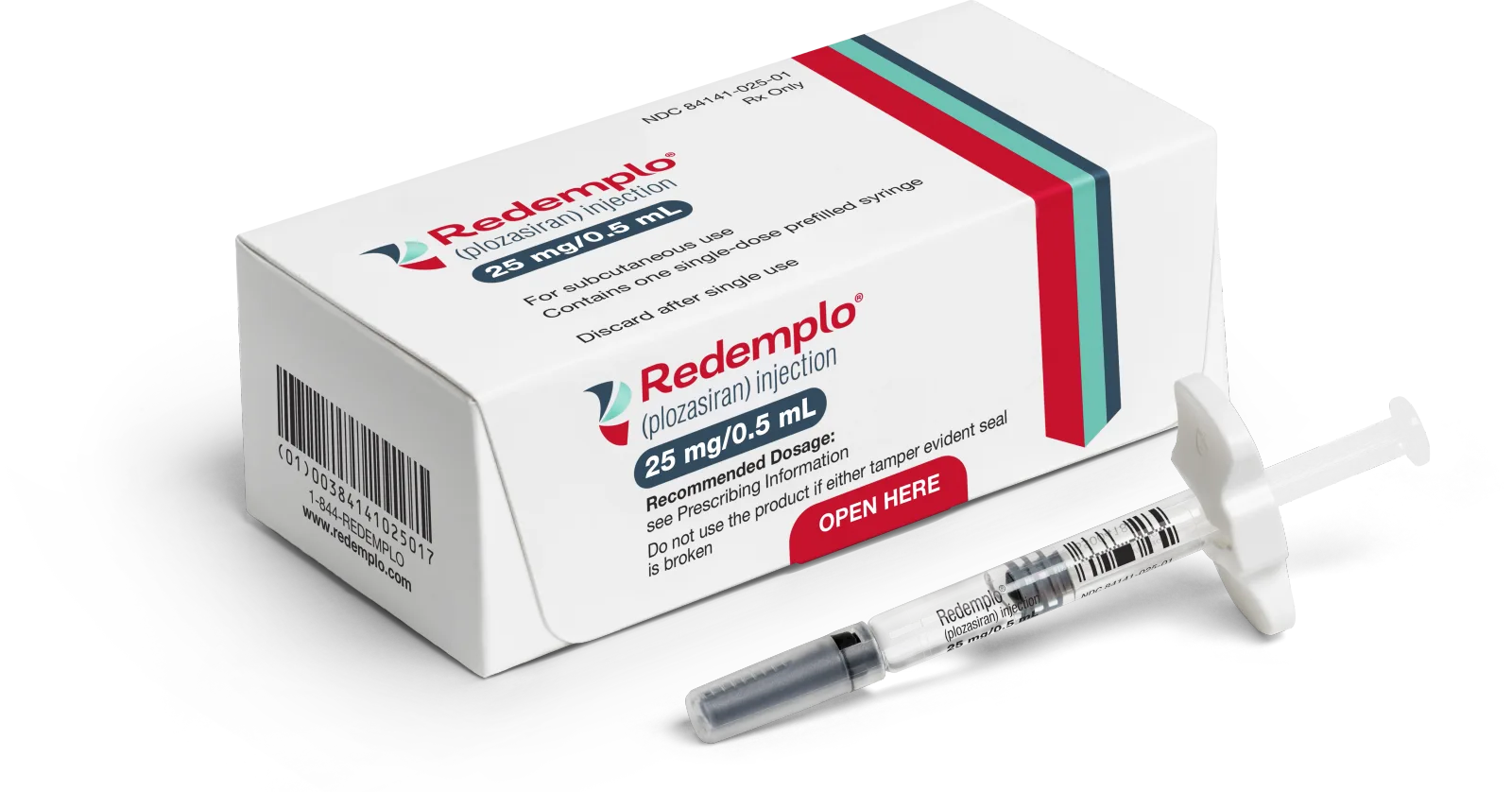
Are your patients ready for Redemplo?

Not an actual patient.
Is Redemplo right for your patients?

Rapid and sustained apoC-III reduction1
AP, acute pancreatitis; apoC-III, apolipoprotein C-III; CI, confidence interval; FDA, US Food and Drug Administration.
REFERENCES Collapse
Collapse
- Redemplo. Prescribing information. Arrowhead Pharmaceuticals, Inc.; 2025.
- Data on file. Arrowhead Pharmaceuticals, Inc.; 2024.
- Redemplo. Instructions for use. Arrowhead Pharmaceuticals, Inc.; 2025.
Indication & Important Safety Information
Indication
REDEMPLO® (plozasiran) 25 mg injection is indicated as an adjunct to diet to reduce triglycerides in adults with familial chylomicronemia syndrome (FCS).
Important Safety Information
CONTRAINDICATIONS: None.
ADVERSE REACTIONS: Most common adverse reactions occurring in ≥10% of REDEMPLO-treated patients and >5% more frequently than placebo are hyperglycemia, headache, nausea, and injection site reaction.